 On November 2nd, my 92nd Street Y course, I Wanna Be A Dancin’ Man: Fred Astaire In New York, comes to a close, with a discussion on, and screening of THE BAND WAGON. Directed by Vincente Minnelli, and released by MGM in 1953, it is considered to be one of the best films about putting on a Broadway musical. Repeating the magic they created on their screenplay for Singin’ In the Rain, the previous year, Betty Comden and Adolph Green took the songs of Arthur Schwartz and Howard Dietz, and wrote the screenplay to The Band Wagon. Fred Astaire is Tony Hunter, a washed up Hollywood Musical Star, who is about to re-enter the world of Broadway theatre. Back in 1931, Fred had appeared in a Broadway revue, the last show to feature both he and his sister Adele, before she left the act to marry a British lord. Such songs as I Guess I’ll Have To Change My Plans, Dancing In The Dark, A Shine On Your Shoes, and other songs were used in the film, which also features Cyd Charisse, Oscar Levant, and Nanette Fabray. As part of the class, I will also include some rare outtakes. The film also features new (for its time) numbers, including “That’s Entertainment” and “The Girl Hunt Ballet. So come to the 92nd Street Y, and get on board THE BANDWAGON, on Monday, December 2nd, at 6:30PM!
Category Archives: Uncategorized
Let’s Face The Music and Dance: Fred Astaire and Ginger Rogers at Cinema Arts Center
On December 16th, 2013, I will be bringing my lecture program, Let’s Face The Music and Dance: The Films of Fred Astaire and Ginger Rogers, to the renowned art cinema of Long Island, the Cinema Arts Center, in Huntington, NY. This program, beloved by many who have seen it, presents highlights from the ten films which Fred Astaire and Ginger Rogers danced and romanced together. In such RKO films as Top Hat, Swing Time, Shall We Dance, Carefree, and ther MGM reunion film, The Barkleys of Broadway, Astaire and Rogers danced their ways into our hearts, and at the same time, advanced the genre and art of dance in the Hollywood Musical. The program will be presented in the theatre’s Sky Cafe on Monday, December 16th, at 7:30PM. Feel free to wear your Ostrich feather gown, and white tie and tails!
Can You Do You Lectures In Your Sleep?
Just recently, I was at a Yankees-Red Sox game (Yankees won) with a friend, who is also a College Professor. At one point during the game, we were discussing lectures that were scheduled soon. My friend asked me, “Can you do your lectures in your sleep’. True, there are certain lectures with clips which i do regularly, but that number has grown. Even though there are fifteen lectures or more in which I use the same clips, I try to always find something fresh to say about the films. There is always something new to discover and learn about Astaire and Rogers, or James Cagney, Directors like john Ford or Frank Capra, or everything else. As a Film Historian, my job is to not only preserve the legacy of classic films, but to constantly discover new facts, fresh new ways to present the clips. I do, however, have to stop waking up in the middle of the night to jot down an idea for a future lecture or film series. Why can’t that wait until morning, when I awake?
Golden Age of Television Drama continues at LIU:C.W. Post
Beginning September 6th, and running for that Friday, and the following three consecutive Friday afternoons, the Fall, 2013 semester begins with my course, The Golden Age of Television Drama: The Plays of Rod Serling and Reginald Rose. Because of the positive feedback for my previous Hutton House Lectures course, Golden Age of Television Drama: A Sampler, this past Spring, and requests for a follow up course, I will now be focusing on such Rod Serling television (pre-Twilight Zone) plays as his Emmy Award winning Requiem For A Heavyweight (the second broadcast of Playhouse 90), plus two earlier plays: Patterns, and The Arena; And then, with the Studio One plays of Reginald Rose, I will focus on the celebrated Twelve Angry Men (directed by a young Franklin Schaffner), plus other Studio One plays, such as The Death and Life of Larry Benson, The Incredible Incident at Carson Corners, and Almanac of Liberty. All plays were performed and broadcast live. Come next year, I plan on presenting another follow up course, focusing on Rod Serling’s first season of The Twilight Zone.
Acting Shakespeare at LIU:C.W. Post In July
This July, I will be teaching a new course in the Hutton House Lectures: which is being offered this Summer at LIU:C.W. Post. In Acting Shakespeare, I will discuss and screen five films. In each film, we will find that scenes from the plays of William Shakespeare, play a major role. In Lowell Sherman’s Morning Glory (1933), Katherine Hepburn (in the first of her four Academy Award Winning roles), is an aspiring Actress, who recites Hamlet’s “To Be Or Not To Be” at a party. In Ernst Lubitch’s To Be Or Not To Be (1942), Polish Actor Joseph Tura (Jack Benny) finds that Robert Stack always leaves upon hearing “To Be Or Not To Be”. Hamlet prevails again in John Ford’s My Darling Clementine (1946), in which a visiting theatrical troupe intends to perform Hamlet in DIdge City; In George Cukor’s A Double Life (1947), Ronald Colman is a stage actor whose mind becomes affected by the role of Othello; and in George Sidney’s 1953 adaptation of Cole Porter’s Kiss Me Kate, a formerly married couple star in a Broadway musical version of The Taming of The Shrew. Course is offered on five consecutive Fridays: July 12th, 19th, 26th, August 2nd, and 9th. All classes begin at 1PM. Fee for this five film series is $100. For more information, and to register, please call 516-299-2580
92nd Street Y Tribeca Finale: Alfred Hitchcock’s Strangers On A Train
Just a few moments ago, while driving, I was listening to Dimitri Tiomkin’s musical score to Alfred Htichcock’s 1951 thriller about criss-cross murders, Strangers On A Train. This will be the subject of my last lecture at the Tribeca branch of the 92nd Street Y, located on Hudson Street, in lower Manhattan. Come Fall, 2013, I will begin lecturing at the main branch of the 92nd Street Y, with two courses: Master of Suspense: Alfred Hitchcock, and Fred Astaire In New York. On Tuesday, June 4th, I will discuss the aforementioned Strangers On A Train, which stars Farley Granger and Robert Walker. It’s based on a novel by Patricia Highsmith (who was annoyed when she received a minimal amount of money for the film rights). It is a story about two men who meet on a train: one is a tennis player, about to divorce his trampish wife, in order to marry the senator’s daughter; the other is a psychotic playboy misfit in search of his next thrill. Thus, an exchanger of murders. This film, produced by Warner Brothers in 1951, came at a time when HItchcock was taking flight from Selznick, and becoming his own boss. He had a few clinkers prior to Strangers. After Strangers, would come I Confess, and then Rear Window, the second version of The Man Who Knew Too Much… pretty much the start of Hitchcock’s golden period of the 1950s (including his collaboration with Composer Bernard Herrmann). A New York town also appears in this Hitchcock film: Forest HIlls, Queens, the site of the tennis stadium (after all, Guy Haines (Farley Granger) is a tennis pro!
Hear the Beat of Dancnig Feet: Busby Berkeley and the 1933 Hollywood Musical at C.W. Post
Kicking off the Summer, 2013 semester of Hutton House Lectures, at LIU:C.W. Post, I will be focusing on three musicals, produced 80 years ago in 1933. Busby Berkeley was instrumental in saving the Hollywood musical genre from obliviaon, partially due to his choreographed dream fantasy sequences in three films produced at Warner Brothers in 1933: 42nd Street (Dir. Lloyd Bacon), Golddiggers of 1933 (Dir. Mervyn Leroy), and Footlight Parade (Dir. Lloyd Bacon). All three films starred Dick Powell and Ruby Keeler, and musical scores by Harry Warren and Al Dubin. All three films advanced the genre of dance on film, and helped filmgoers escape the horrors of the Great Depression. I will be discussing each film, and then present a screening of each film: 42nd Street (June 7th), Golddiggers of 1933 (June 14th), and Footlight Parade (June 21st). This course, as with all Hutton House lectures, are offered at Lorber Hall, on the LIU:C.W. Post campus. For more information, and to register, please call 516-299-2580.
Heading to 92nd Street Y Main Branch in Fall, 2013
With the closing of the 92nd Street Y Tribeca, I have been invited to teach two film courses at the main branch of the 92nd Street Y, in Fall, 2013. Beginning in October, I will be teaching Alfred Hitchcock: Master of Suspense, in which we will discuss and view four films: Notorious (October 2nd), Strangers On A Train (October 9th), Dial M For Murder (October 16th), and North By Northwest (October 23rd). Then, in November, I will be teaching I Wanna Be A Dancin Man: Fred Astaire In New York, which focuses on five films, starrnig Mr. Astaire, produced at MGM, which demonstrate the maturing of Fred Astaire as an actor and dancer, as well as showing the advance of the Hollywood Musical. The films to be viewed and discussed include: Broadway Melody of 1940 (November 4th), Easter Parade (November 11th), The Barkleys of Broadway (November 18th), The Belle of New York (November 25th), and The Bandwagon (December 2nd). All classes will begin at 6:30PM, and run till 9:00PM, and will be held at the Lexington Avenue main branch of the 92nd Street Y.
Let Us Not Ask For The Moon….Bette Davis at Warner Brothers at the 92nd Street Y Tribeca
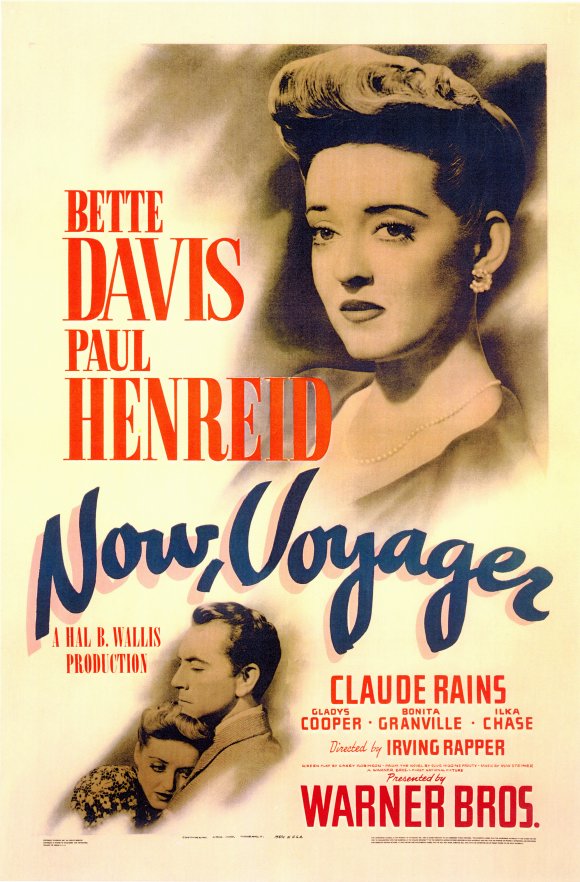 It was recently reported that the downtown 92nd Street Y Tribeca annex is closing after July 15th, and all classes and events will be moved to the main campus building of the 92nd Street Y, which is located on 92nd an Lexington Avenue. My last series, which will be offered at the 92nd Street Y Tribeca, will be devoted to Bette Davis’ golden years at Warner Brothers. Although she would receive Academy Awards for her roles in Dangerous (1935), and Jezebel (1938), she would continue to fight for her roles, and would be constantly at odds with Studio head Jack Warner. There are accounts of Jack Warner, hearing Bette Davis’ approaching footsteps, which would force him to hide in his office bathroom, and would wait there until she left. In this series, which will be offered in April, we will discuss, and then screen four of Ms. Davis’ most memorable films, produced at Warner Brothers: Jezebel (1938), on April 10th, Dark Victory (1939), on April 16th, The Letter (1940), on April 23rd, and Now Voyager (1942), on April 30h. For more information, please be sure to go to 92Yorg/INSESSION, or call 212-415-5500.
Young Mr. Lincoln at Port Washington Library
 I will be returning to the Port Washington Public Library, on Friday, April 5th, to discuss, and then screen the 1939 John Ford film, Young Mr. Lincoln, starring Henry Fonda as the (then) future President, in his early years. This is part of a Abraham Lincoln exhibit and series of lectures and presentations, being sponsored by LIU:C.W. Post. It is interesting to note that Henry Fonda was reluctant to portray the role of Abraham Lincoln, since he thought it was like playing God. John Ford had to use some colorful lanugage to persuade Fonda into reconsidering, and taking the role of Lincoln. This film would lead to many film collaborations between Fonda and Ford, including The Grapes of Wrath, My Darling Clementine, Fort Apache, and others. This program, which begins at 12:10 at Port Washington Public Library, is part of the library’s “Sandwiched In” lecture series.
 Harwood's Hollywood